1. Upbringing and the change in my academic journey
I grew up in Lucknow and come from a modest financial background. I scored 48% in Class 5 at St. Paul's College. That is the period I mean when I describe myself as a roughly 50% student. My results improved later to about 94% in Class 10 and 95% in Class 12. Access to education and financial support mattered. My early marks are part of the story, alongside the improvement that followed.
2. My drop year and UPSEE preparation
My drop year was very intensive. I would go to coaching soon after waking up, attend around six hours of classes and then spend another twelve hours studying at the coaching centre, sometimes until midnight. I carried two lunch boxes, and my father sometimes brought fresh food in the evening. This continued through the week for about twelve months. Most of that time went into solving questions. Mock tests helped the most because they exposed topics I had missed and showed me where to improve. I secured rank 9 in UPSEE 2019, the Uttar Pradesh state entrance examination. My JEE Advanced rank corresponds to the 99.9th percentile when compared with the 11,47,125 candidates who appeared for JEE in 2019.
3. What IIT Kanpur gave me
At IIT Kanpur, I discovered opportunities I hadn't known about, including internships, open-source contributions and research. Seeing other students pursue them made me realise I could pursue them too. That broadened my ambitions.
My internships included test automation and backend tooling at Securonix, and embedded software in C and assembly at Texas Instruments. During college, I earned around ₹10 lakh in total through internships, freelance work and other paid work.
The PD Murti Scholarship reduced the financial burden on my parents.
My coursework included building a compiler in C++, a program that translates code into instructions for a computer. For undergraduate research with Professor Manindra Agrawal, I wrote a Python implementation of SUTRA, a COVID-19 epidemic model. I collected public case figures and prepared the data before fitting the model to the reported cases. These projects connected the theory I was studying with building working software.
As a Senior Academic Mentor, I helped mentor and support more than 3,000 students. I also represented students' academic concerns on my department's undergraduate committee and contributed to BTech curriculum discussions. These responsibilities gave me practice explaining technical ideas and understanding where students struggled.
My internship at Texas Instruments led to a pre-placement job offer. I also received an Infrastructure Engineer offer from Squarepoint Capital through campus placements. Those offers boosted my confidence and gave me a head start in my engineering career.
4. My current role and the AI systems I build
I'm Lead Engineer at Lumian.ai, based in Dubai, where I work on production AI agents for Amazon brands. These systems help businesses analyse information and carry out workflows. My responsibilities cover the software around the AI model: the agent runtime, integrations, memory, scheduled tasks, permissions, approvals and evaluation. I work across the path from a user's request to the tools and information needed to carry it out.
A production agent has to handle several questions at once. What information is it allowed to access? Which actions need a person's approval? What context must it retain between steps? How should it respond when a tool fails or a task is interrupted? These are central engineering concerns in my work. I focus on how the components fit together, how failures become visible and how each customer's information stays separate.
At Abacus.AI, I worked on machine-learning platform integrations and enterprise connectors, including Microsoft Teams meeting-transcript retrieval and export, conversation-state handling and controls over source visibility.
At Simbian, my contributions included security-agent infrastructure, access across customer accounts, role-based permissions, audit records, authentication and model-usage controls. That work connected backend systems, user interfaces and security requirements.
One concrete example is my contribution to TaskGen, an open-source framework for building AI agents. I improved how an agent's internal state is saved and restored. I also worked on a related investigation flow that saved the agent's state while waiting for human input and reloaded it when that input arrived. This addresses a practical problem: an AI workflow may need to continue across several interactions, with a person involved along the way.
I have also had contributions merged in AnythingMCP, the Python library exceptiongroup and the Rust library erased-serde. These changes addressed how tool failures are reported, how exception handlers retain their order and how streaming behaviour is preserved during data serialization. Working with maintainers on existing projects requires a precise explanation of the problem, focused regression tests and revisions that fit the codebase. It gives other engineers a concrete way to inspect my work.
I shared my experience at Dubai AI Hub's Knowledge Lab #2, hosted at The British University in Dubai on 26 September 2026. My talk covered system design with coding agents, including clear interfaces, service ownership and explicit failure handling. Those are the same concerns I encounter while building production systems.
Across these roles, open-source contributions and technical discussions, my focus has been making AI applications useful and dependable through careful software engineering. That combines understanding models with the ability to build, debug, secure and maintain the systems around them.
5. Technical skills students should learn
I would start with Python, SQL, data structures and a working understanding of probability, statistics and linear algebra. Then learn how software is built: APIs, databases, Git, debugging, testing and deployment. For AI, use tools such as PyTorch and Hugging Face to understand models and build practical applications. Learn model APIs, retrieval and evaluation as well.
I would also encourage students to learn with AI coding tools such as Claude Code and OpenAI Codex. Take a small project, ask the tool to explain an unfamiliar section, compare possible approaches and help investigate an error. Then read the changes, run the code and explain the reasoning yourself. That turns the tool into a learning aid while keeping you responsible for the result.
Build a small project, put it in front of users and study where it fails. Students should be able to explain, test and maintain the work they produce. My experience with production agents and research reviewing has made me pay close attention to evidence: what a system actually does, how it was tested and where its limitations are.
6. Whether an IIT degree is essential
IIT helped me through its academic environment, peers and opportunities. Students from other colleges can also build strong careers in AI. Fundamentals, useful projects, internships, open-source contributions and clear communication give them ways to demonstrate their ability. A project becomes more convincing when someone can use it and its author can explain the choices, limitations and results.
Open source is one practical route. My own work includes accepted changes in TaskGen and other software projects. Contributing requires engaging with an existing codebase and a maintainer's expectations, which is useful experience for an engineering job. I would encourage students from lesser-known colleges to make their work visible and seek feedback. Access and resources differ, so scholarships, mentors and free learning material can make a real difference.
7. How Homeo AI began and what it does
Homeo AI began with something very personal. My mother was diagnosed with cancer around 2024. She completed conventional treatment and went into complete remission. Even after that, I remained worried about the possibility of the illness returning and kept looking for ways to support her during recovery. That search led me to conversations with homoeopathic practitioners in Lucknow and elsewhere in India.
While obtaining medicines for my mother, I began asking the practitioners about their work. Across roughly ten sessions, I tried to understand how they gathered information, looked through reference material, selected what to review and used software. I was approaching it as an engineer: what information did they need, where did they spend time and what could a software tool help them organise? Those conversations shaped the idea for Homeo AI.
The application brings AI-assisted reference search, case notes, follow-up information and document preparation into one place. I lead its development, deployment and ongoing operations. The aim is to support the practical tasks that came up in those conversations, including finding reference material and organising information. The practitioner reviews the information and makes clinical decisions.
Building it has also meant listening to users after release and supporting the software. As of 23 October 2026, Homeo AI had 1,475 registered user accounts and 6,796 saved chat conversations. I have also received direct feedback from a practitioner describing their team's use of the service. These are concrete ways for me to understand how the software is being used.
I have given many users free access, with modest payments from others helping support operating costs. My motivation is to make useful tools accessible to practitioners who may have limited resources. The experience connects a concern in my own family with an engineering contribution I can make.
8. How AI may change engineering jobs
I expect AI to change a large part of an engineer's everyday work over the next five years. Coding, reading unfamiliar code, generating tests and exploring possible implementations are already areas where AI tools can assist. I use AI coding tools in my own engineering work, and that makes me think more carefully about the responsibility around the generated output.
My experience across Abacus.AI, Simbian and Lumian has involved the systems around a model: integrations, saved state, permissions, authentication, usage controls and workflows involving people. For example, I contributed to saving and restoring agent state in TaskGen and worked on an investigation flow that could preserve state while waiting for human input. Getting an AI system to continue correctly through a real workflow involves several engineering decisions beyond its first response.
I have also explored reliability through a standalone crash-recovery experiment using Apache Fluss, with an accompanying article published on the project's official blog. The experiment examines what happens when a worker fails around an external action and how it can reconcile what already happened before trying again. It is the kind of problem I expect engineers to spend more time thinking about as AI systems take on more tasks.
That is why I see problem definition, system design, debugging, evaluation, security and communication becoming especially valuable. Engineers will need to decide whether generated work is correct, whether it solves the user's problem and how it behaves when something goes wrong. Reviewing research has reinforced the same habit for me: examine the evidence, assumptions and limitations before accepting a claim.
I also expect small teams to be able to build more ambitious products. That could open opportunities for students and independent builders who can combine technical foundations with good judgment. The effect on specific jobs remains uncertain. My advice is to learn these tools through real projects and keep taking responsibility for the complete system you deliver.
9. My goals for the next five to ten years
Over the next five to ten years, I want to make an even larger impact in AI and software engineering by building on the work I am already doing. That means continuing to lead engineering at Lumian, extending my open-source contributions and helping more engineers and students benefit from what I learn.
At Lumian, I want to take the engineering team to greater heights as we build more capable and dependable AI systems. My focus will remain on the work that makes these systems useful in practice: handling complex tasks, working safely with other software and recovering when something goes wrong. I want our work to reach more users and influence how teams build reliable AI applications.
Through open source, I want to deepen the contributions I already make through open-source software. I want to take on harder engineering problems, share the methods and results, and create work that other developers can use, extend and build into their own products. Adoption by other teams and improvements they can demonstrate would be meaningful signs of a larger contribution to the field.
Giving back is already part of my work through mentoring and making software accessible to people with limited resources. I want to continue that and extend its reach, especially for students from modest backgrounds who may not know which opportunities they can pursue. Sharing practical learning material, helping with projects and guiding early-career engineers are ways I can contribute alongside my professional work.
I want to keep pushing the boundaries of what AI can do in software engineering, while using the opportunities that creates to support others.
10. My advice to students from modest backgrounds
An early result does not have to become a permanent label. Start with a clear next step: strengthen one subject or skill, practise consistently and check whether you are improving. For entrance exams, mock tests can reveal gaps. For an engineering career, build projects you can explain and improve through feedback. Look for scholarships, internships, free resources and mentors who can help with a specific question. Financial constraints are real, and people have different levels of support. Focus on the opportunities you can access now and keep building evidence of your ability.
Family details
Father: Ashok Kumar Vaish, small business owner - sweet shop.
Mother: Mamta Vaish, a homemaker.
Sibling: Aastha Vaish, currently pursuing a BTech in Computer Science at VIT, Amaravati.
Seven photographs
Open all seven full-resolution PNGs in Google Drive
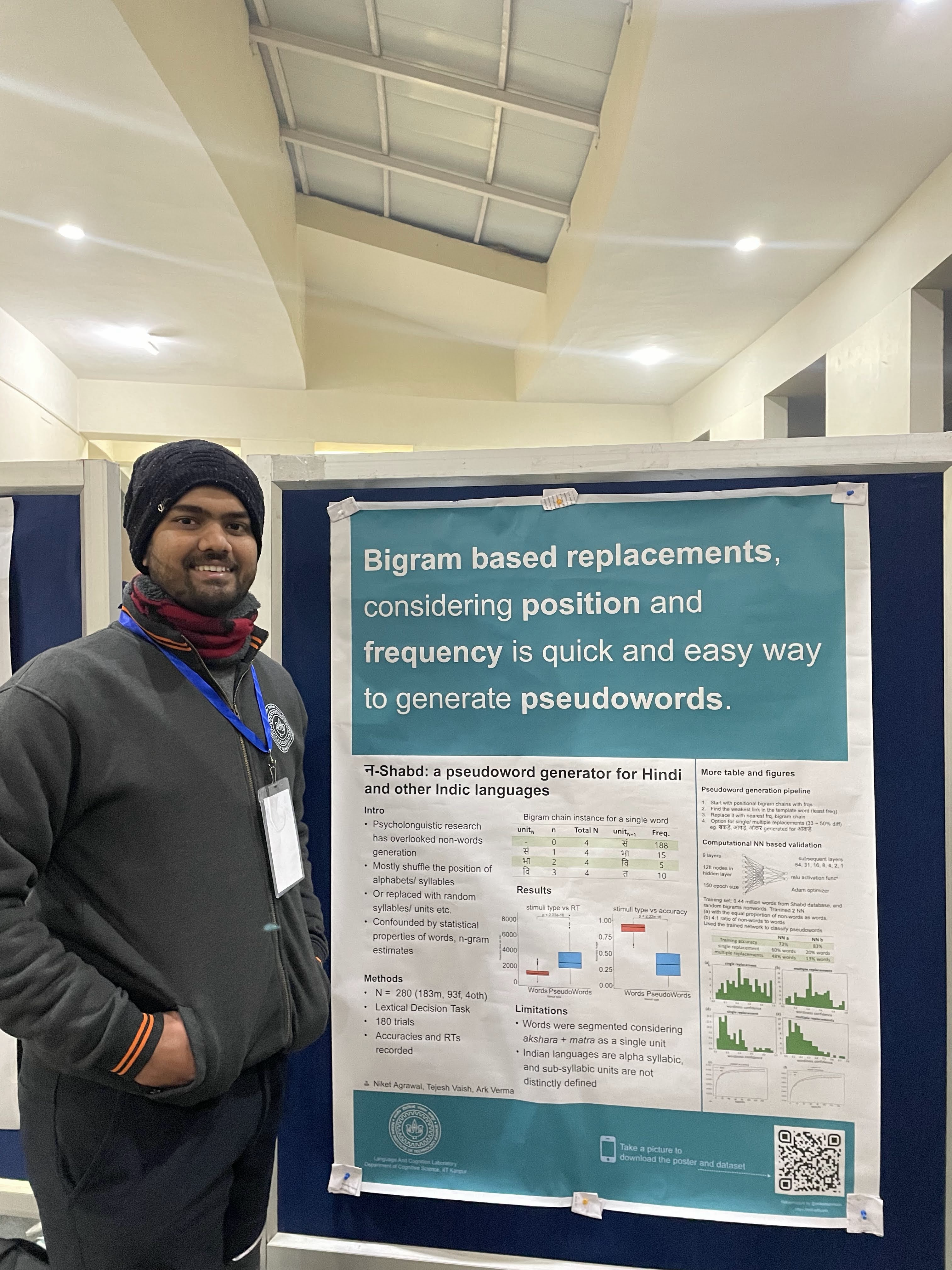
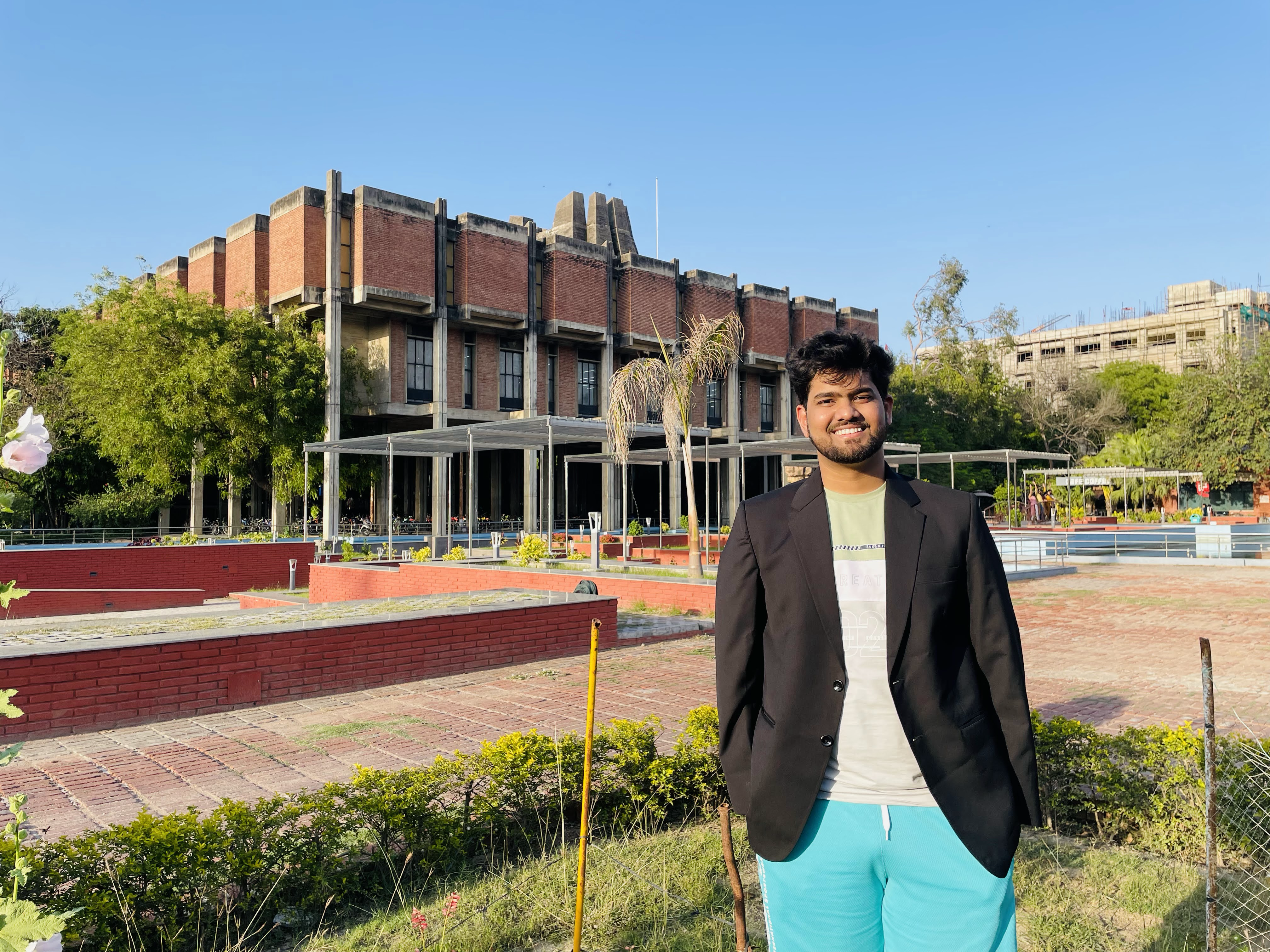
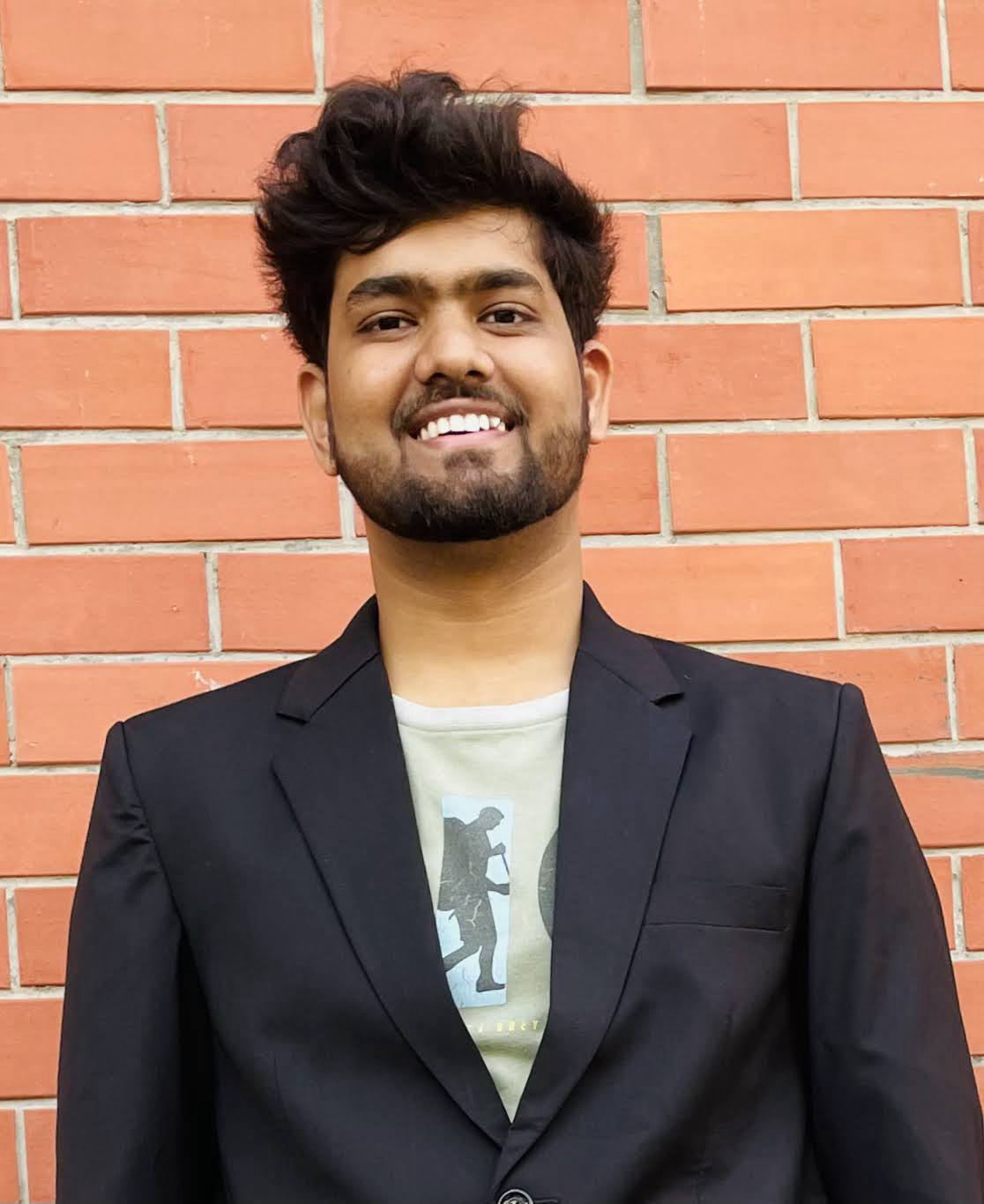
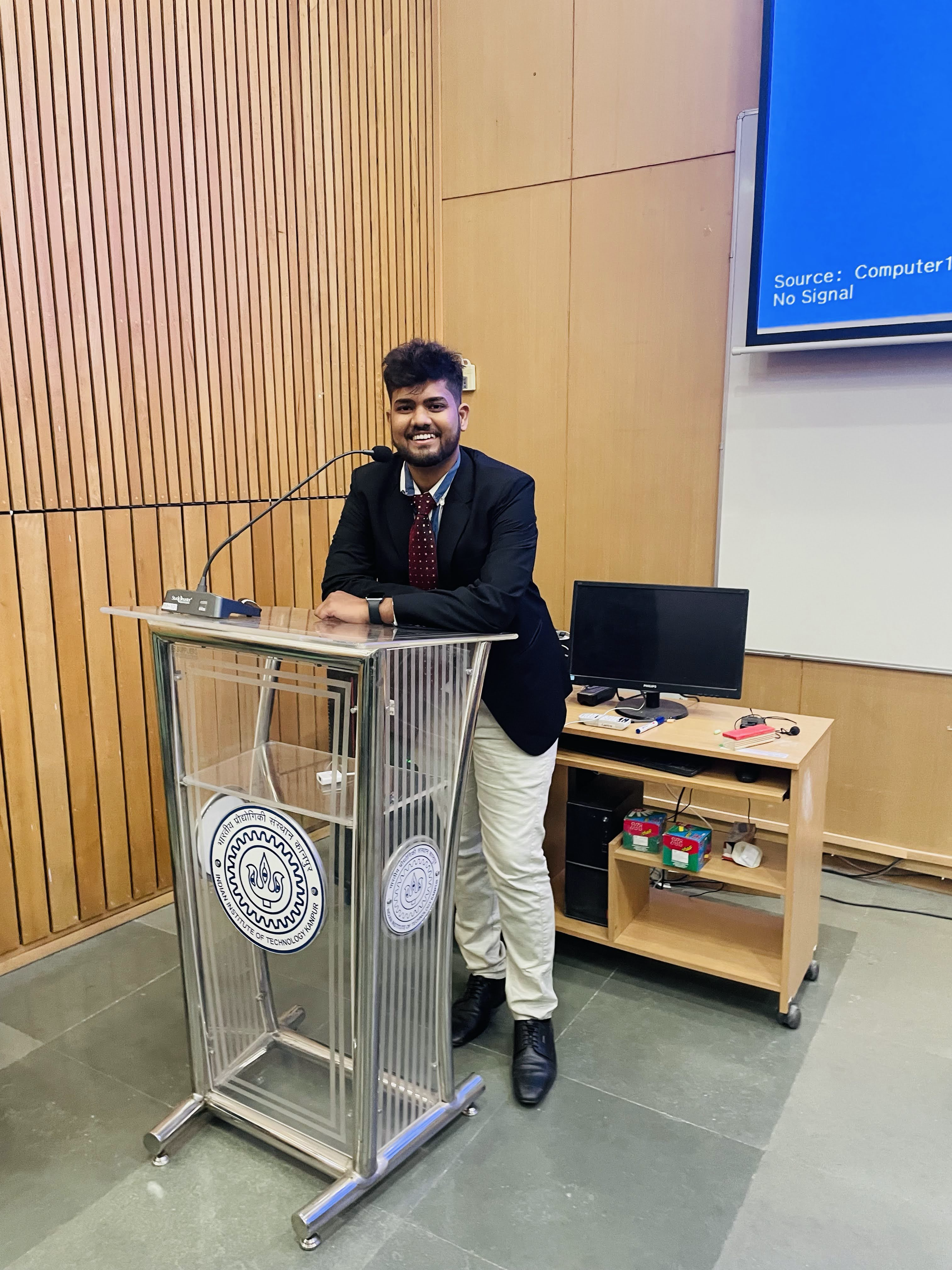
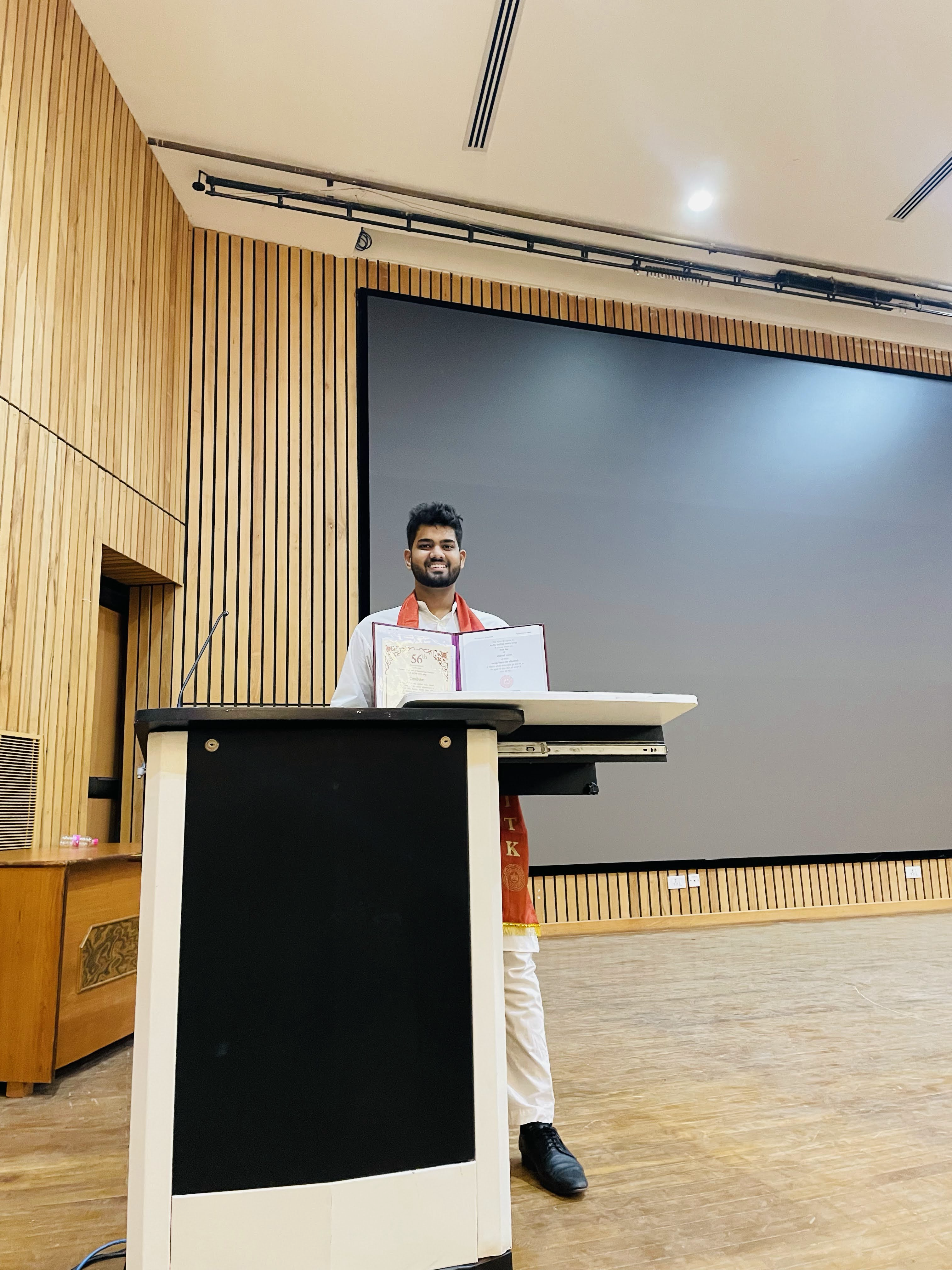
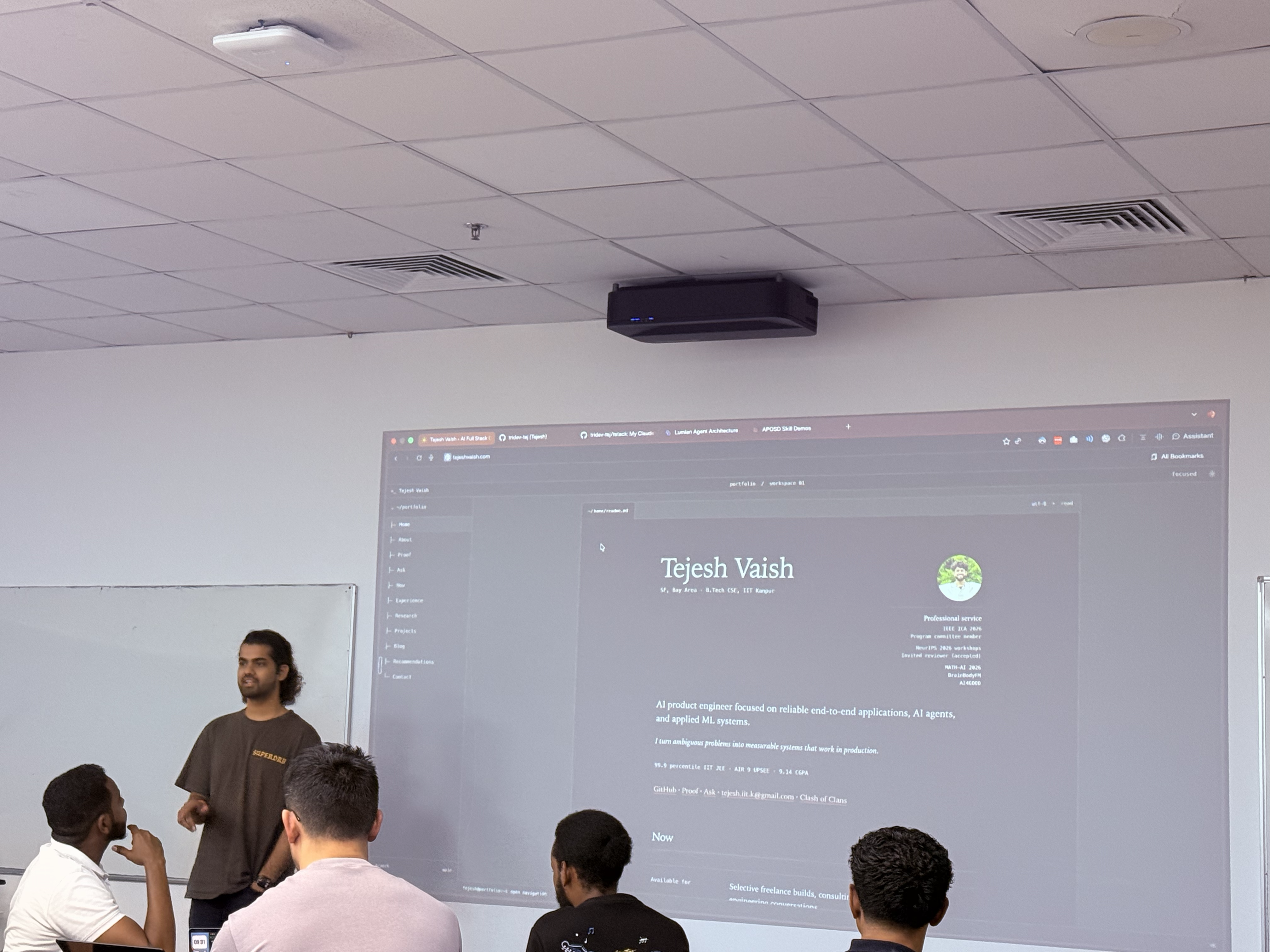
Photographs from my education and work. The final photograph includes older profile text on the projected screen.